
India's Electronic Music LEGACY
The tapes that changed history
Electronic music in India and its history is an ongoing process of recovery and re-evaluation that continues to shift our understanding of global music movements. For decades, the narrative of electronic synthesis was centered almost exclusively on Western institutions, yet the discovery of the NID archives proves that Indian musicians were pushing technical boundaries as early as the 1960s.
By utilizing the first Moog synthesizer outside of the West, these artists fused traditional rhythmic sensibilities with radical new technology, creating a sonic legacy that lay dormant for fifty years. Today, as researchers digitize these lost tapes, the story of Indian electronica is being rewritten not as a modern import, but as a deep-rooted tradition of homegrown innovation. As we move forward, we will trace the evolution of this artistic legacy and analyze key compositions to gain a deeper insight into the cultural and technical climate of the era. By examining these works, we can better understand how Indian visionaries integrated modular synthesis into the nation’s burgeoning modern identity.
The Birth of a Sonic Revolution
India's First Electronic Music Studio: A Historical Overview
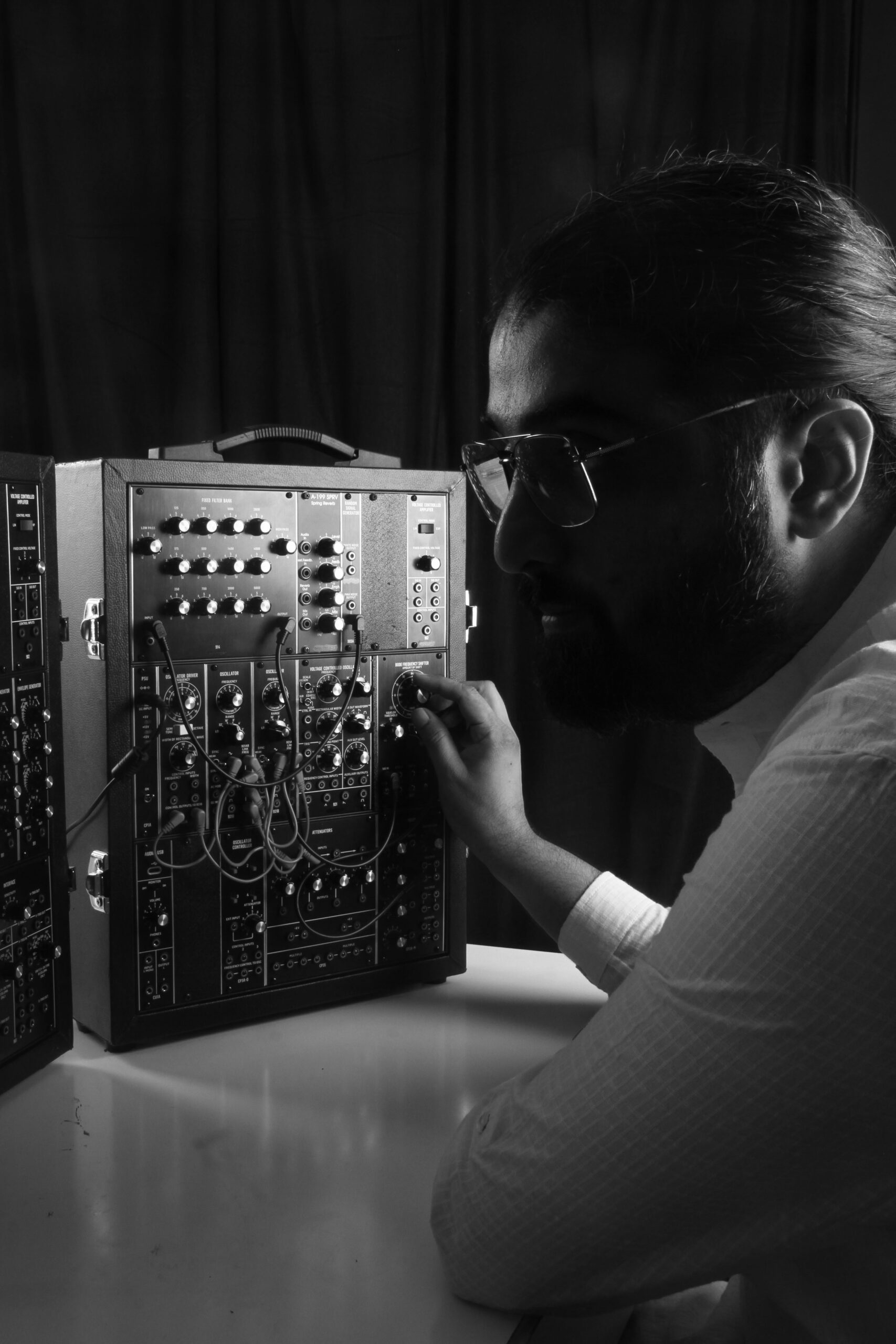
In 1969, the National Institute of Design (NID) in Ahmedabad became home to India’s first electronic music studio, a groundbreaking initiative spearheaded by Gita Sarabhai. This studio marked a pivotal moment in India’s musical history, introducing electronic sound synthesis to the country’s rich cultural practices. Over the years, the studio produced seminal works which blended electronic innovation with Indian sensibilities.
The rediscovery of ‘The NID Tapes’ by Paul Purgas has reignited global interest in this unique fusion of sound. Switched on India celebrates this legacy, inviting audiences to explore the profound impact of the NID Moog and its role in shaping a new era of Indian electronic music. Through this project, we honor the visionaries who paved the way for a sonic revolution that continues to inspire musicians and audiences worldwide.
Key Works of the NID Studio
Exploring Iconic Compositions
The following works have been recovered:
S.C. Sharma:
After The War, Dance Music ( I, II , III), Electronic Sounds Created On Moog, Wind & Bubbles
I.S. Mathur:
My Birds, Moogsical Forms, Once I Played A Tanpura, Shadows Of The Show, Soundtrack Of Shadow Play
Atul Desai:
Compositions, Recordings For Osaka Expo 70
Gita Sarabhai:
Gitaben’s Composition (I & II)
Jinraj Joshipura:
Space Liner 2001 (I & II)
Dance Music I
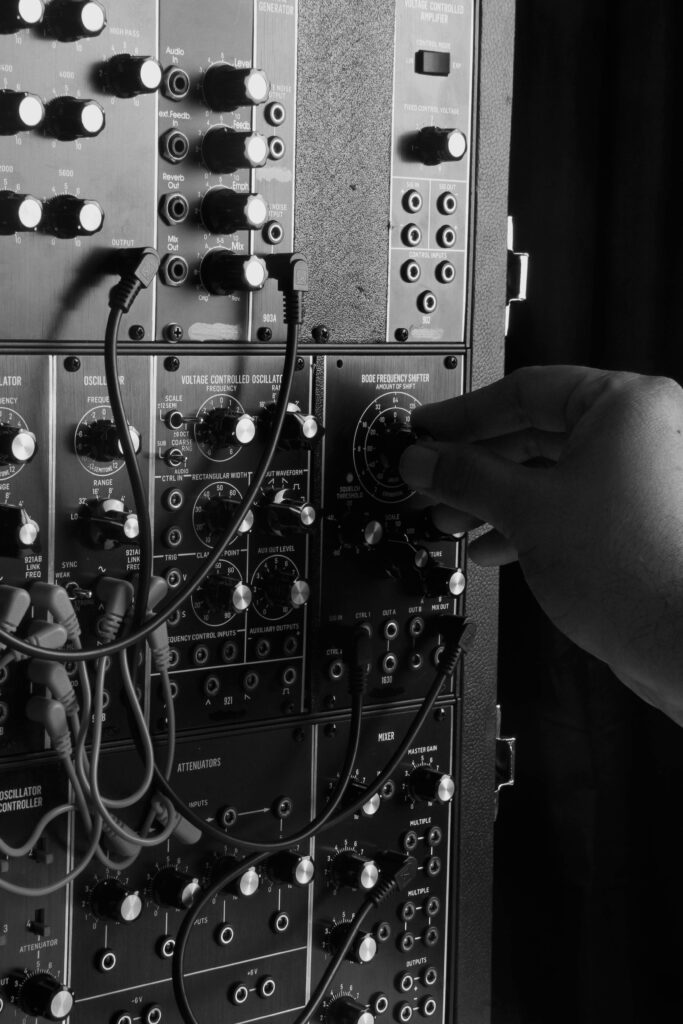
The Dance Music series by S.C. Sharma represents rhythmic experiments. He crafted steady, low-pitched pulses and interlocking sequences that predate the aesthetics of Techno and ambient House.
Space Liner 2021
Space Liner 2001 by Jinraj Joshipura are futustic compositions inspired by 2001: A Space Odyssey. The sounds predicted modern science fiction soundtracks and moved beyond traditional orchestral scoring.
Recordings for Osaka Expo 70
Eminent Hindustani classical musician Atul Desai used the Moog as both a sound processor and a synthesizer, layering traditional recordings to create foundational Musique Concrète compositions.